
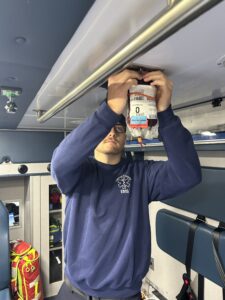
 Clinton County Emergency Medical Services is now carrying whole blood on its ambulances, allowing paramedics to give blood transfusions at the scene of an emergency. The program is made possible through a partnership with Eskenazi Health and marks a major advancement in pre-hospital care for the community.
Whole blood is used to treat patients who have lost a large amount of blood due to traumatic injuries or serious medical emergencies. Severe blood loss can prevent the body from getting enough oxygen, leading to life-threatening complications.
By carrying whole blood on ambulances, paramedics can begin transfusions immediately for patients who need it most, rather than waiting until arrival at the hospital.
Unlike traditional IV fluid or component therapies such as packed red blood cells (PRBCs), whole blood contains all components – red blood cells, plasma, and platelets – allowing it to more effectively stabilize patients in need.
“Every minute matters in medical emergencies,” says Steven Deckard, Director of Clinton County EMS. “Being able to administer whole blood in the field will have a lasting impact on the level of care we can provide before a patient reaches the hospital.”
Eskenazi Health serves as the blood supplier and oversees the regulatory requirements for the program, ensuring proper storage, tracking, and stewardship. Whole blood has a limited shelf life – typically 21 to 35 days – so units are rotated every seven to ten days to ensure safety.
Clinton County EMS has worked for more than three years to bring this capability to residents. The county joins nearly a dozen EMS agencies across the state that have implemented whole blood programs.