A Former state senator says Indiana still not ready for next pandemic and calls for local ‘after-action’ planning.
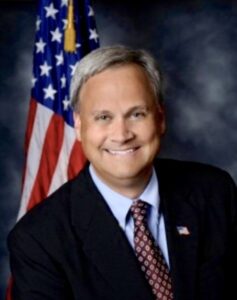
Former Indiana State Sen. Jim Merritt told WILO’s Party Line audience that Indiana — and the nation — are still not prepared for the next pandemic and urged communities, including Clinton County, to start planning now. Merritt appeared on the program this week to discuss his new book, “Lessons Learned,” which examines the COVID-19 response and what he calls a lack of coordinated, credible leadership during the crisis.
‘Lessons Learned’ and a call for an after-action report
Merritt said his book grew out of watching state and national leaders “scramble” through the early months of COVID-19 after the Indiana General Assembly adjourned in March 2020. He described 2020 as “a real cluster,” with competing experts and “so many voices and not one authority” guiding the public.
By 2022, Merritt said he was still waiting for a formal review of what happened. “I just started thinking, well, you know, there’s gotta be an after action report… and by 2022 no one had called for it, so I thought I’m gonna put this down on paper, I’m gonna write my own after action report,” Merritt said of the book. He added that “Lessons Learned” also includes a history of past pandemics and how societies responded.
Trust, communication and the ‘tree’ metaphor
Merritt opened the book with a metaphor comparing a healthy community to a healthy tree, saying that both need strong foundations to survive a crisis. “If a tree is going to grow and leaf out and have big sturdy branches, it’s gotta have great water and wonderful soil,” he said. “If the community is gonna grow, it’s gotta have truth, gotta have credibility, it’s gotta have trust… fear has to be eliminated.”
He argued that during COVID-19, those conditions broke down, contributing to what many local residents experienced as confusion and conflicting orders. Merritt told listeners that small businesses, churches, schools and government agencies were “operating in silos,” each “on their own” without a unified, trusted message to the public.
Critique of COVID response: CDC, leadership and broadband gaps
Merritt, who served more than 30 years in the Indiana Senate, said one key lesson from COVID-19 is that the Centers for Disease Control and Prevention should not be the lead decision-maker in the next pandemic. “CDC should not be in charge next time,” he said on Party Line. “They are a backward-looking research entity that should not have been in charge.”
He praised Gov. Eric Holcomb’s effort to communicate daily via Facebook Live during the height of the pandemic, but said many Hoosiers never saw those briefings. “You may or may not recall, Eric went on Facebook Live every day at 1:30,” Merritt said. “However… 65 percent of the state was covered by broadband at the time. And so 35 percent of the state was not getting that message.”
Merritt said future emergency communication needs to use multiple trusted messengers, including clergy, firefighters and other local leaders, and be able to reach every household. He pointed to satellite-based systems such as Starlink as examples of technology that could help ensure statewide coverage.
Proposed solutions: wastewater testing and speaking with one voice
In the book’s third chapter, Merritt said he outlines several practical steps governments and communities can take before the next outbreak. One tool he highlighted is monitoring municipal wastewater to detect early signs of disease. “You can look at municipal wastewater and understand if something is flowing through the bodies of the citizens so you know… the health of the community,” he said.
He also emphasized the need to identify a single, credible authority for public health messaging. “Another lesson learned is the idea of speaking with one voice, with credibility and knowing who the authority is,” Merritt said, noting that other countries and even some U.S. communities handled that aspect better than Indiana. He cited examples such as South Korea and a Colorado town that strictly controlled movement in and out of the community as models worth studying.
Military role and Indiana’s political climate
Merritt suggested that the U.S. military, rather than civilian health agencies, should lead the operational response in a future pandemic because of its experience with infectious disease and logistics. He pointed to Operation Warp Speed, the federal vaccine initiative led by military officials, as an example. “There is a section of the U.S. Army that knows everything about infection… about pandemics,” he said. “I think in the next pandemic the military should run the response… because of their people respecting them as well as the success of Operation Warp Speed.”
He acknowledged, however, that public trust in institutions, including the military, has eroded and that “there is a challenge with that today” as Americans debate the proper role of federal and state power. Merritt said he did not always know “who to believe” during COVID-19 and argued that state leaders need to start rebuilding trust now, before the next crisis.
From child protection laws to pandemic warnings
During the interview, Merritt also reflected on his legislative career, noting that he often pursued policies that some colleagues initially saw as counterintuitive. He cited authorship of Indiana’s “kids first” license plate law to fund child abuse prevention, the state’s safe haven “baby box” law and the Lifeline Law, which grants limited immunity to underage drinkers who seek help in an alcohol emergency.
Merritt said those experiences shaped his approach to pandemic policy and his belief that public debates have become more about political philosophy and “tribalism” than about “good public policy.” “Politics has changed a great deal in the last 30 years,” he said.
“Lessons Learned” is available through Amazon and Barnes & Noble online, and Merritt can be reached via email and social media. He also hosts the “Merritt in the Morning” podcast, where he continues to discuss public policy and preparedness.