
Clinton County has seen flat to slightly declining population since 2000, even as its job base and incomes have inched upward, pointing to economic resilience without significant growth. Analysis of data used in this report is no better or worse than the accuracy of that data. Information for this story was collected from available official U.S. Census Data or other generally reliable sources. Obviously if the data collection from these sources is inaccurate, the reliability of these numbers is reduced.

Population since 2000
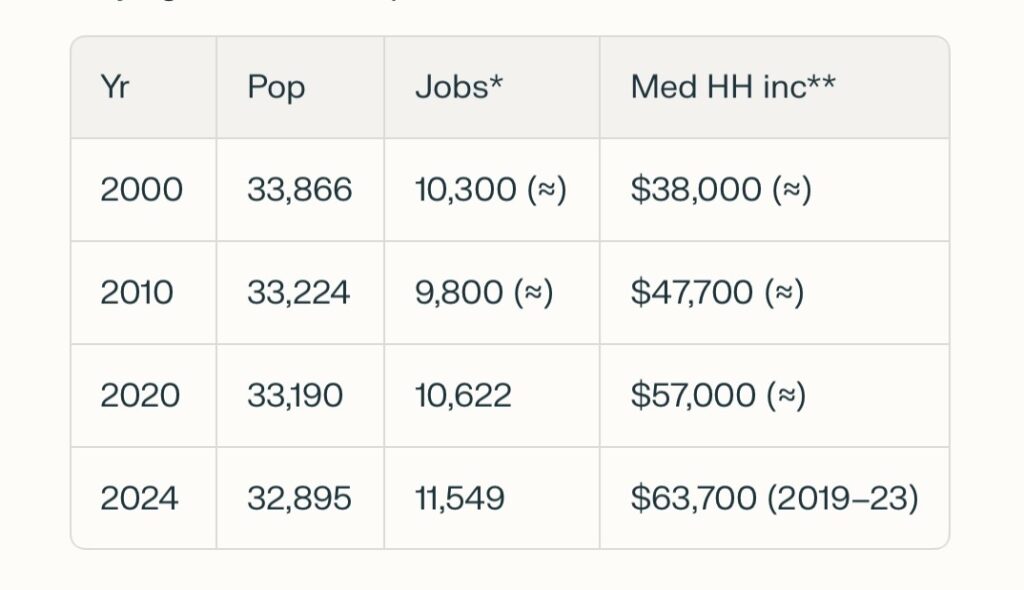
Clinton County’s population was 33,866 in 2000 and slipped to 33,224 by the 2010 Census, a decline of about 2 percent. The 2020 Census counted 33,190 residents, essentially unchanged from 2010 and still below the 2000 peak. State data show the county at 32,895 in 2024, a modest 0.9 percent drop from 2020, with a projection to 32,206 by 2030. Over the same 2000–2020 period, Indiana and the nation both grew, meaning Clinton County has effectively lost ground in relative terms.
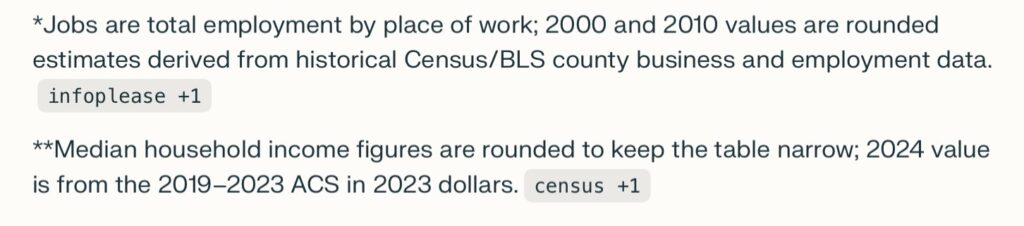
Population and jobs snapshot for Clinton County:
Recent population estimates suggest the county is losing more residents to other U.S. counties than it gains, but that loss is partly offset by international migration and natural increase. From 2023 to 2024, Clinton County recorded a net domestic migration loss of 183 residents, a net international migration gain of 117, and a natural increase of 82 (births over deaths). The county’s population is aging modestly, with Census data showing a growing share of residents 65 and older, which mirrors state and national trends. That demographic mix often puts pressure on schools and health care in different ways: fewer school-age children per household, but higher demand for medical and long‑term care.
Economy, jobs, and income rise in Clinton County
While headcount has stayed flat, the job base has grown. Total employment in the county rose from 10,622 in 2020 to 11,549 in 2024, an increase of about 9 percent over five years. Manufacturing remains the largest single employer, adding more than 400 jobs between 2020 and 2024, while construction and accommodation/food service also posted double‑digit percentage gains. The county unemployment rate averaged 2.6 percent in 2023, below the statewide rate of 3.4 percent, signaling a relatively tight labor market. Median household income reached $68,732 in 2024, placing Clinton County near the middle of Indiana’s 92 counties, and per capita personal income stood at $48,728 in 2023.
Housing and community profile
Housing growth (roof and door count) has been modest, tracking the flat population trend. Clinton County had an estimated 13,496 total housing units in 2023, with about 67.8 percent owner‑occupied and a median home value of $157,300. Median gross rent was $677, notably below many urban and suburban counties in Indiana. Frankfort remains the county’s dominant population center, with an estimated 16,409 residents in 2023—about half of the county’s total—followed by smaller towns such as Rossville (1,500), Mulberry (1,217), Kirklin (705), Colfax (698), and Michigantown (424).
Big picture: stable, not booming
Taken together, the data paint a picture for Clinton County that has held its own economically but not grown in population for more than two decades. Job counts and incomes have climbed, and unemployment is low, yet the number of residents has not recovered to the 2000 level and is projected to edge down through 2030. For local leaders, that mix raises familiar questions: how to attract and retain working‑age residents, how to balance new housing with demand, and how to leverage a strong manufacturing and service base into broader long‑term growth.