“No Data Center”, “SB1”, “Budget Shortfalls”, “Electrical Grid Collapse”, “Rising Water and Electrical Rates” “Unprecedented Investment in Clinton County” “Poor Communication” “Pollution”, “Significant increase in assessed valuation”, “Leverage our proximity to Purdue”, “Signal to other advanced industry that Clinton County is viable, shovel ready and pro-growth.” The list of reasons for and against a proposed Data Center in Clinton County can go on and on.
This article will summarize some of the pros and cons voiced about the proposed Clinton County data center. Readers can compare and contrast a few of those pros and cons with the QTS Data Center in Fayetteville, Georgia (population 20,419 in 2024)
WILO 96.9 FM, Boone 102.7 FM and WILO 1570 AM traveled to Georgia last week and visited the exterior of the large working QTS Data Center during the day and again during the night in Fayetteville, Georgia.

This article is not intended to render a full and comprehensive report on the QTS Data Center in Fayetteville. That is beyond the scope of this piece. Instead, this article will simply share observations of the QTS Data Center through our on-site lens with some limited background information about the center to add context pertaining to this important decision for Clinton County and the Region.

The proposed data center near Frankfort/ConAgra in Clinton County is framed as a multi‑billion‑dollar, multi‑hundred‑acre project with very large power needs and relatively modest on‑site employment, so most “for” and “against” arguments cluster around tax base and county growth versus land use, utilities, and community character. Below are 21 commonly cited ‘reasons in favor and against’, tailored to the current Clinton County proposal and Indiana’s broader data‑center push. A video of a recent city council meeting in Vinland New Jersey is available to watch at the end of this article. Vinland, New Jersey is the location several Clinton County community leaders went on a fact-finding tour of a Data Center being built by the same potential builders of the Clinton County Data Center.
“Top 21 reasons FOR”
- Massive private investment (often quoted in the multi‑billion‑dollar range, potentially over 10 billion dollars, which is unprecedented for Clinton County).
- Significant increase in assessed value that can expand the property‑tax base for schools, city, county, and other units if abatements are limited or time‑bound.
- Hundreds of construction jobs over many years of phased build‑out, supporting local contractors, trades, hotels, and restaurants.
- Tens to low hundreds of permanent direct jobs (operations, security, facilities, IT) with above‑average wages compared with many existing local positions.
- Additional indirect and induced jobs in services, logistics, food, maintenance, and housing tied to the new workforce and suppliers.
- Signal to other tech and advanced‑industry firms that Clinton County is a viable, shovel‑ready location, improving future recruitment of employers.
- Alignment with Indiana’s strategy to become a national data‑center and AI infrastructure hub, which state leaders say can create a “multiplier effect” in broader economic development.
- Potential to leverage proximity to Purdue University and regional talent pipelines for specialized technical roles and internships.
- Use of a site already discussed for industrial or logistics use near existing rail, highway, and food‑processing infrastructure, rather than scattering growth across greenfields county‑wide.
- Large long‑term purchases of power and services can justify grid upgrades, fiber expansions, and other infrastructure that may also benefit other users over time.
- State data‑center tax exemptions on equipment and electricity (up to 50 years for very large investments) can make the project financially viable in Indiana versus other states, keeping the capital here.
- If structured well, local tax abatements can front‑load construction and jobs while still delivering sizable tax revenue once abatements phase out.
- Opportunity to negotiate community‑benefit agreements (scholarships, training programs, infrastructure contributions, or quality‑of‑life projects) as conditions of zoning or incentives. Clinton County Community leaders have been impressed with and publicly referenced the “community-minded” track record of the owners of the proposed data center campus.
- Data centers generally emit fewer traditional industrial pollutants (like smokestack emissions) than heavy manufacturing, shifting the industrial base toward cleaner, service‑heavy operations.
- Limited truck traffic relative to some logistics or warehousing uses of similar acreage, since most activity is digital rather than freight‑based once the site is built.
- Potential branding boost for Frankfort/Clinton County as a high‑tech node where advanced computing, AI, or medical research workloads might be hosted, which some local advocates emphasize.
- Opportunity for local schools and Ivy Tech‑style programs to build curricula around data‑center operations, electrical systems, and cybersecurity, giving students “pathway” careers that do not require leaving the region.
- Possible ancillary development: higher‑end housing, retail, and services to serve new workers and visiting vendors, especially near I‑65 and major corridors.
- Stronger justification for broadband and middle‑mile fiber improvements in and around Clinton County as data‑heavy users locate here.
- Additional commitment for a partnering casting plant supplying additional jobs. The casting plant would make walls and component building materials for construction throughout the midwest. This additional firm is contingent on the data center locating in Clinton County.
- Chance to negotiate strict enforceable design standards (setbacks, berms, light trespass, tree buffers, water consumption levels, architectural treatments) that might make this one of the more visually and operationally responsible data‑center campuses in the state, setting a precedent for future projects.
“Top 21 reasons AGAINST”
- Loss of prime agricultural land and disruption of multi‑generation farm operations on acreage that has historically been zoned and used for farming.
- Concern that once land is converted from agriculture to industrial/light‑industrial, it will likely never return to farming, altering the county’s long‑term identity.
- Very high electricity demand, raising fears of brownouts, grid stress, and higher rates or reliability issues for existing homes and businesses.
- Large water needs (for cooling) in some data‑center designs, which worries residents about impacts on local wells, aquifers, and future drought resilience. (Note: the proposed data center has a ‘closed loop’ design. A closed-loop cooling system (think of your car radiator cooling system) allows the data center to use less water than Frito Lay and other existing water customers in Frankfort.)
- Light pollution from security lighting and building illumination, especially if the campus operates 24/7 with outdoor lighting visible from nearby homes and further deteriorating astronomical viewing from Camp Cullom’s Prairie Grass Observatory, one of the largest astronomical observatories in the State.
- Noise pollution from chillers, backup generators, and cooling equipment, which residents in other communities have complained about and locals fear will disrupt rural quiet.
- Visual impact of large windowless buildings, fences, and high‑voltage lines on what is now open farm and countryside near Frankfort.
- Worry that state‑level sales‑tax exemptions and local abatements will give away much of the financial upside while leaving taxpayers to fund schools, roads, and services.
- Skepticism that permanent job numbers justify the land, utility, and incentive trade‑offs, given common estimates of roughly 0.5–1 direct job per megawatt.
- Concern that property‑tax arrangements could shift more burden onto homeowners and small businesses if the data‑center campus receives deep abatements.
- Fear that rezoning without a disclosed, named end user could allow a less desirable operator to occupy the site later, after zoning is permanently changed.
- Distrust created by perceived poor communication with nearby landowners, including complaints that elderly or adjacent owners were not properly contacted or included.
- Perception that decisions are being rushed to meet legislative or corporate timelines rather than the community’s pace, fueling public anger at meetings.
- Worries that heavy new transmission lines or substations will be routed across or near homes and farms, with unclear compensation or routing details.
- Concerns about precedent: approving one large campus could open the door to additional big‑power users in the same corridor, compounding grid, water, and land‑use impacts.
- Fear that promised indirect “spin‑off” growth (restaurants, housing, tech firms) is speculative, while the land‑use change and power demand are immediate and permanent.
- Examples from other Indiana fights (Boone County LEAP projects, Franklin Township, etc.) being cited as cautionary tales where residents felt overrun by state‑backed megaprojects.
- Anxiety over security risks or the area becoming a perceived target, even if such risks are largely theoretical compared with other industrial sites.
- Claims of lack of transparency with Logistix as land owners were approached before general citizenry and leaders were informed.
- Concern that the project may not align with Clinton County’s comprehensive plan or long‑stated preference to avoid broad rezoning without a clear, fully vetted end user.
- Broader unease that once the county locks in this path, it shifts the region’s narrative from “agricultural and small‑town community” to “utility‑scale infrastructure corridor,” which some residents strongly oppose as a matter of values.
Undoubtedly there are additional valid “pros and cons” that could be added, considered and discussed.
WILO 96.9 FM, Boone 102.7 FM and WILO 1570 traveled to the large QTS data center campus in Fayetteville, Georgia located 25 miles south of the city of Atlanta. The data center is still located in the expansive Greater Atlanta Metro Area. The Fayetteville, Georgia QTS data center has become a case study in how a very large, long-term data-center campus can deliver major investment and jobs while generating intense confilct over power lines, safety, land use, and trust in local decision-makers.
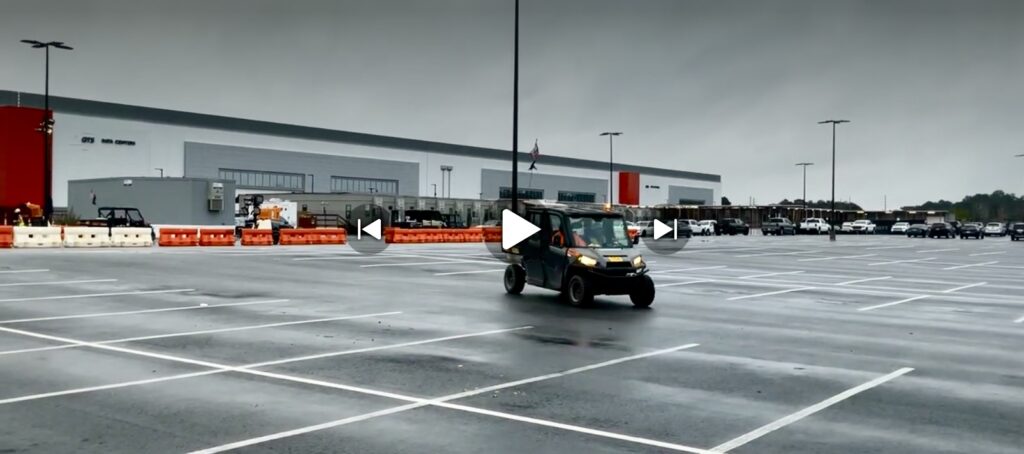

The QTS campus in Fayetteville is planned as a roughly 6.6 million square foot development on more than 400 acres annexed and rezoned specifically for data centers and offices. Construction began around 2023 and is expected to continue in phases through about 2032, making it a decade-long project.

Public reporting and local coverage describe it as one of Georgia’s largest construction projects, with a promise of about 100 or so long-term operational jobs plus large numbers of construction jobs over many years. The project is owned by QTS (a major data-centers operator) under Blackstone, which markets the campus as a major regional hub for cloud and enterprise computing.

The QTS data center was approved by Fayetteville and Fayette County officials by annexation and rezoning of roughly 400+ acres for the campus despite significant organized residential opposition. Opponents argued that the site was in the heart of the county and too close to established neighborhoods and historic properties, and they urged turnout at public meetings to stop or modify the project.
Residents’ objections tracked several of the “against” themes of the proposed Clinton County data center concerns: loss of semi-rural character, conversion of large tracts to utility-scale infrastructure, and fears that once the land is rezoned for data-center use, the change is effectively permanent. Some critics also said the job count was low relative to the land and power footprint, echoing concern about “few jobs per acre” and “few jobs per megawatt.”

A major flashpoint in Fayette County has been the grid build-out required to serve the QTS campus. Georgia Power is installing new high-voltage transmission lines with poles approaching 200 feet tall in front of homes, churches, and through established neighborhoods to carry power to the data center.
Homeowners report being asked to sell strips of their property for easements, often for relatively modest amounts of money, and complain that they had little say in route selection. Residents and church leaders have publicly warned about property-value impacts, aesthetics, and quality-of-life changes, and one historic church has led protests against lines that would run along its property and near its cemetery.


Several local TV stories and rallies frame the fight as less about the data center itself and more about the routing and scale of the power infrastructure required to support it. This aligns closely with the Clinton County worries about “what will the power lines and substations look like, and where will they go?” rather than about server halls as such.
Multiple serious safety incidents at the Fayetteville site have become public, including at least one fatal electrocution. A 25 year old electrical worker died after receiving an electric shock at the QTS construction site in June 2025.

Residents and activists around the Fayetteville project frequently complain that they were not adequately informed early, had limited influence over annexation and routing decisions, or were given assurances that later felt incomplete. Social-media posts and local interviews describe feelings of being “run over” by a state-backed, utility-tied project and be large corporate interests.
WILO 96.9 FM, Boone 102.7 FM and WILO 1570 AM visited the QTS campus during the day and night to see what impact the center seemed to have on aesthetics, light pollution, noise and general layout of the facility. We also visited a popular private Christmas lighting display about three miles from the Data Center location and talked with the owner about their experience with the electric bill before and after the data center coming on line. (see video below).

Approximately three miles from the data center, the Gaddy family hosts a Christmas light display each year. This has been a feature of the Fayetteville, Georgia area for years. We were able to ask the owners of the Christmas light display if there were any increases in their power bill after the data center was built nearby.


The following is a very short clip with one of the hosts of the Gaddy Family lighting display. She was asked if the family was experiencing higher energy bills since the data center became operational.

There is currently discussion in Georgia about needs for more infrastructure to support the Data Centers in Georgia and who is going to pay for the needed infrastructure. CLICK HERE for a recent article in Yahoo News about this subject.
It would be important to ascertain who will pay for any needed additional infrastructure resulting from the increased and changing needs of Data Centers state-wide. Will Data Centers pay the infrastructure bill or will the bill be passed on to residents and small businesses?
WILO 96.9 FM, Boone 102.7 FM and WILO 1570 will be discussing this article on the Local Live talk show “Party Line” Monday December 15th at 9:00 AM. Phone lines will be open after the topic is introduced. You may call 765-659-3338 to ask questions or voice your opinion.
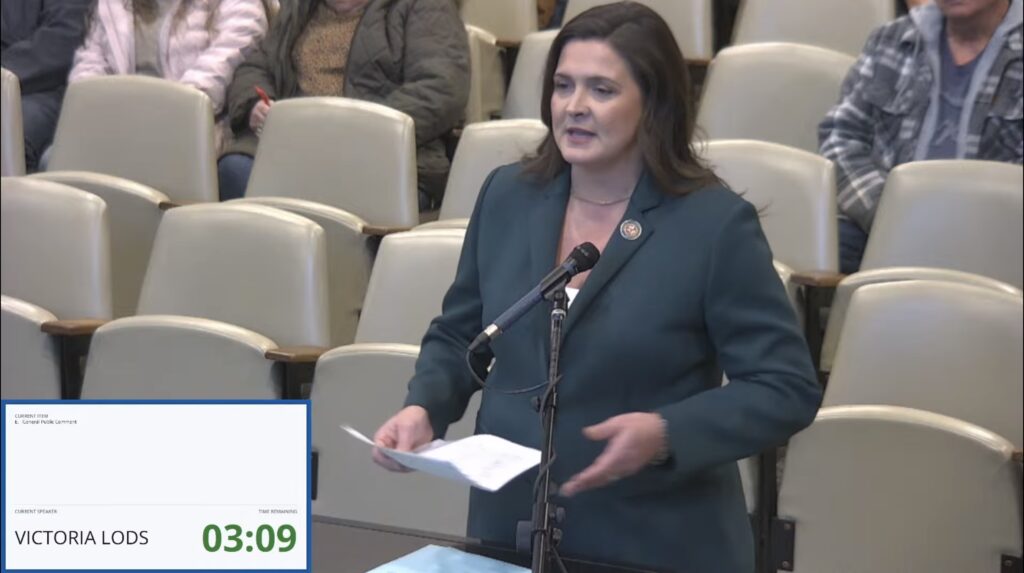
The following video is from a Vineland New Jersey City Council meeting. Public comments about the data center are included in this video. The Vineland New Jersey Data Center was toured by several community leaders from Clinton County earlier this fall.
To watch Vineland City Council Meeting, CLICK HERE.