
North-Central Indiana residents from miles around will have a front-row seat to the night sky Saturday June 20th at Prairie Grass Observatory as Camp Cullom opens its doors for “Moon Night” at the community stargazing open house. Weather permitting, telescopes will begin slewing toward the heavens as soon as the sky is dark enough, likely between 8:30 and 9 p.m. at the rural observatory just northwest of Frankfort.
Reminder: Park east of the Nature Center/Museum, not at the observatory. This will reduce car light pollution at the observatory site throughout the evening and increase safety for attendees.
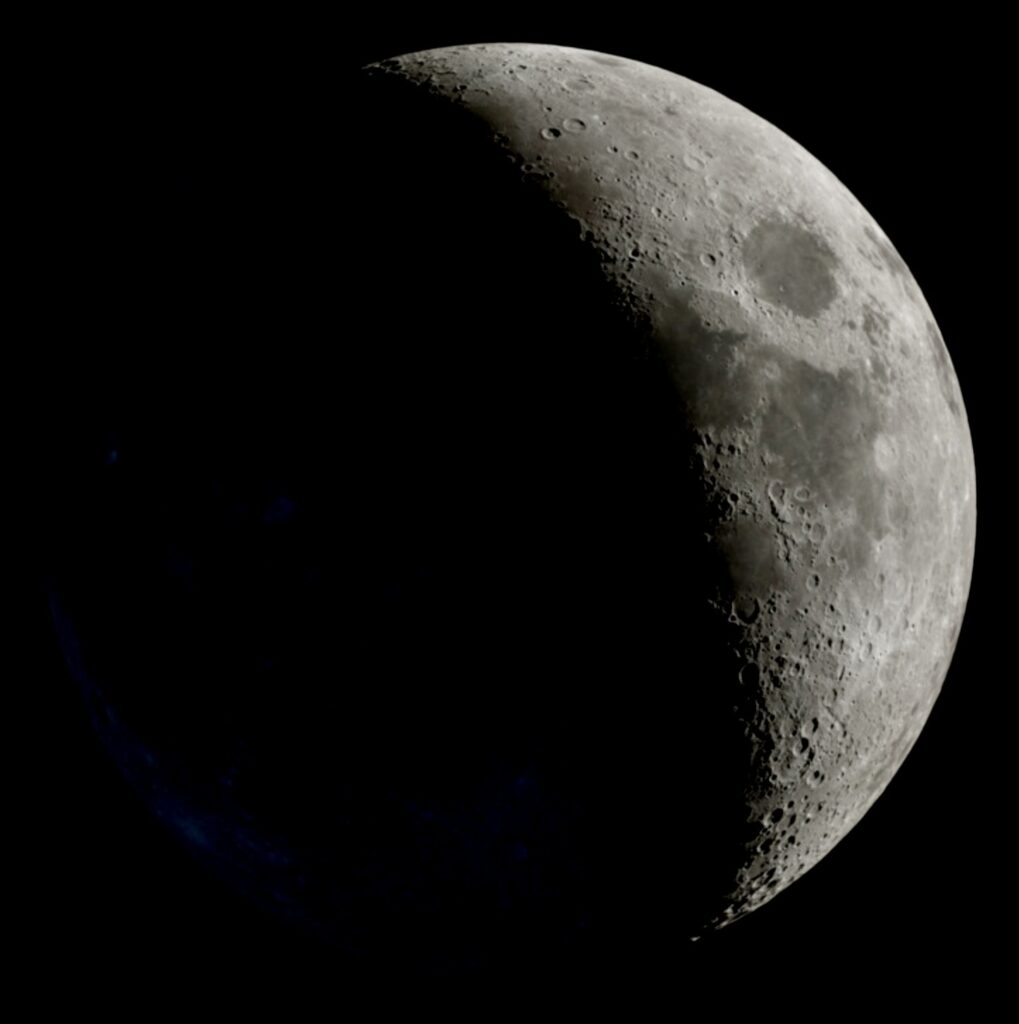
Unlike a full moon, which can wash out fainter objects, Saturday’s crescent moon will be just right for showing off mountains, craters and long shadows along the “terminator” – the line between lunar day and night that you can clearly see in the attached image. That sharp boundary is where the low angle of sunlight makes the Moon’s rugged surface pop into view, a favorite target for both beginners and seasoned observers.
“People are always surprised by how three‑dimensional the Moon looks through the eyepiece,” Russ Kaspar at Prairie Grass Observatory said ahead of the event. “You can see crater rims, mountain chains and lava plains that humans first explored during the Apollo missions, all in one field of view.”

Visitors will be invited to look through the observatory’s large telescopes as well as smaller instruments like a Seestar imaging scope and giant binoculars, with volunteers on hand to point out features on the Moon and answer questions.
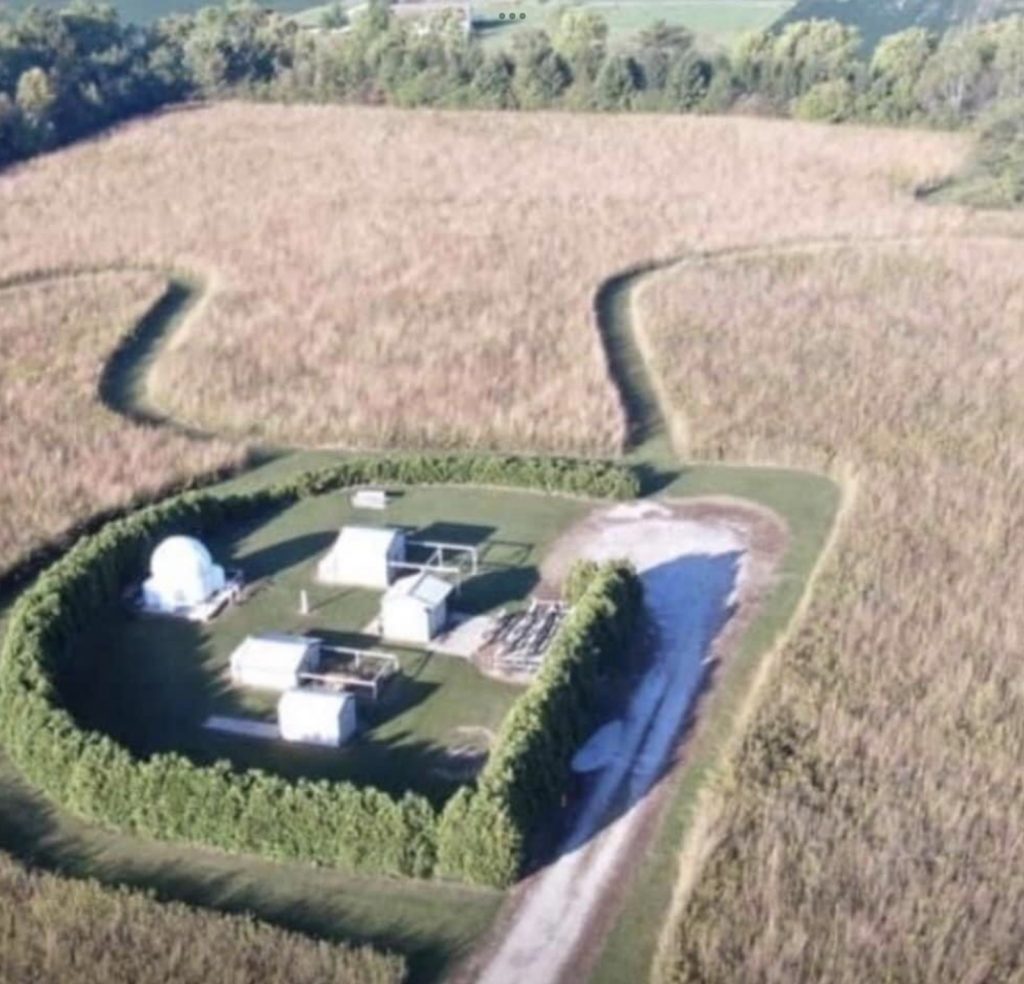
Located at Camp Cullom, 6815 W County Road 200 N between Mulberry and Frankfort, Prairie Grass Observatory sits under some of the darker skies left in central Indiana. That makes it possible not only to study the Moon in detail, but also to swing over to bright planets, star clusters and galaxies once twilight deepens and if weather permits.
Open houses at the observatory are family-friendly, and organizers encourage guests to dress for the evening, bring a red-filtered flashlight if you have one (not required), and arrive with plenty of questions.
—
“Fun Facts” to keep in mind when coming to moon night at Camp Cullom:
• The Moon is Earth’s only natural satellite and the brightest object in our night sky after the Sun.
• On average, the Moon orbits about 238,855 miles (384,400 kilometers) from Earth – you could fit about 30 Earths in the space between our planet and the Moon.
• The Moon is roughly one‑quarter the diameter of Earth and only about 1 percent of Earth’s mass.
• It takes the Moon about 27.3 days to orbit Earth and the same 27.3 days to spin once on its axis, which is why we always see nearly the same face.
• Many of the dark “seas” on the Moon are ancient lava plains formed billions of years ago when huge impacts cracked the crust and allowed molten rock to flood the surface.
• The craters you’ll see along the crescent’s terminator were carved by asteroid and comet impacts, preserving a record of our solar system’s early history.
• The Moon’s gravity helps drive Earth’s ocean tides and also stabilizes our planet’s tilt, which keeps our seasons reasonably steady over long periods.